




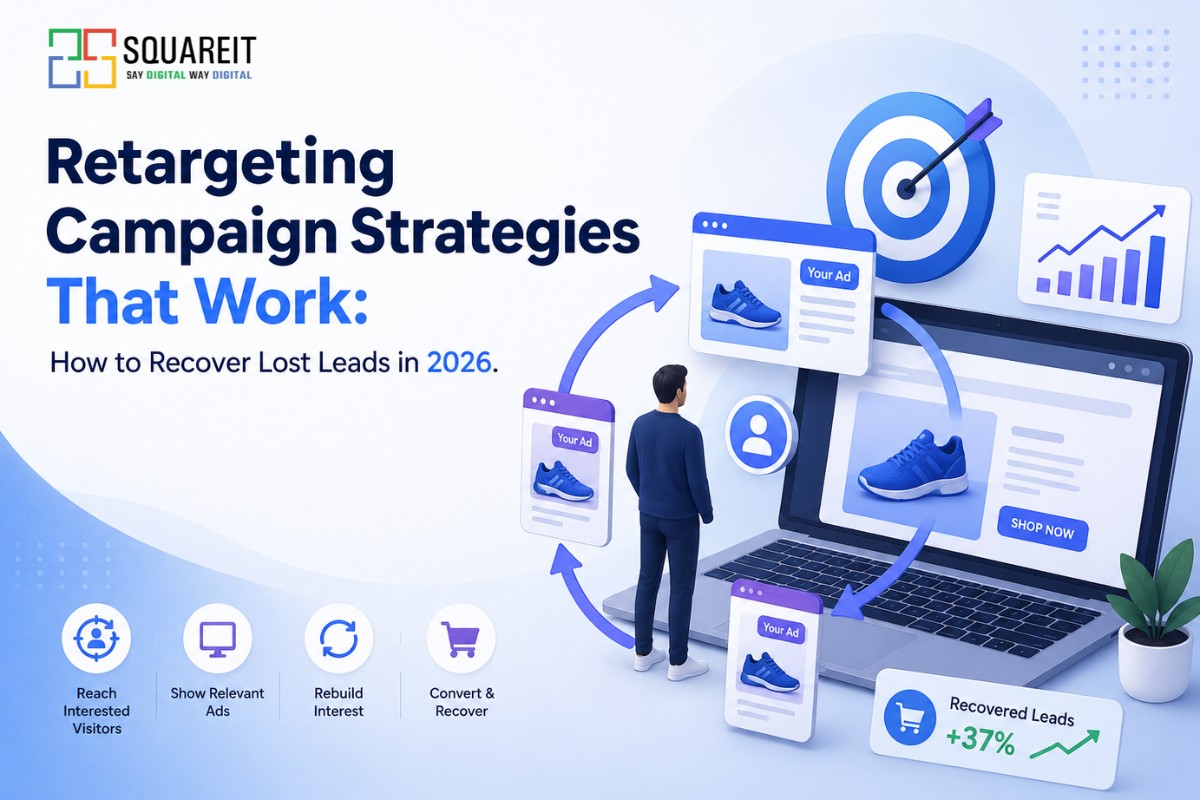
In 2026, attracting website visitors is no longer the biggest challenge for businesses. The real challenge is converting those visitors into paying customers. Studies consistently show that more than 90% of users leave a website without taking any action. They browse products, read service pages, compare options, and then leave.
This is where Retargeting Campaign Strategies become one of the most powerful tools in digital marketing.
Retargeting allows businesses to reconnect with users who have already interacted with their brand. Instead of letting potential customers disappear forever, businesses can remind them about products, services, or offers through targeted advertisements across various platforms.
Whether you run an eCommerce store, a local business, a SaaS company, or a service-based agency, effective retargeting can significantly improve conversions, reduce customer acquisition costs, and increase ROI.
In this guide, we'll explore proven retargeting campaign strategies that work in 2026 and show you how to recover lost leads efficiently.
What Are Retargeting Campaigns?
Retargeting is a digital advertising technique that targets users who have previously interacted with your website, app, social media page, or digital content.
These users have already shown interest in your products or services but have not completed a desired action such as:
- Making a purchase
- Filling out a lead form
- Booking a consultation
- Downloading a resource
- Requesting a quote
Using tracking technologies such as the Meta Pixel and Google tracking tags, businesses can display personalized retargeting ads to these users as they browse other websites, social media platforms, or search engines.
The primary goal is simple: bring potential customers back and encourage them to convert.

Why Retargeting Is More Important Than Ever in 2026
Consumer behavior has become increasingly complex. Most customers now interact with multiple devices and platforms before making a purchase decision.
A typical customer journey might look like this:
- Discover your brand on social media.
- Visit your website.
- Leave without buying.
- Search competitors.
- Read reviews.
- Return later to purchase.
Without a strong retargeting strategy, you risk losing prospects during this process.
Benefits of retargeting include:
- Higher conversion rates
- Improved brand recall
- Lower advertising costs
- Better customer engagement
- Increased return on ad spend (ROAS)
- More qualified leads
Strategy #1: Segment Your Audience for Better Results
One of the biggest mistakes marketers make is showing the same advertisement to every visitor.
Effective remarketing campaigns begin with audience segmentation.
Create different audience groups based on behavior:
Product Viewers
Users who viewed specific products but didn't purchase.
Cart Abandoners
Visitors who added products to their cart but left before checkout.
Blog Readers
Users who consumed educational content but haven't become leads.
Previous Customers
Customers who have already purchased from you.
Service Page Visitors
Users interested in specific services.
This segmentation allows you to create highly personalized ad retargeting campaigns that speak directly to user intent.
Strategy #2: Use Dynamic Retargeting Ads
Dynamic retargeting automatically shows users the exact products or services they viewed on your website.
For example:
If someone viewed a smartwatch on your website, they will later see ads featuring that same smartwatch.
Dynamic retargeting ads deliver:
- Personalized experiences
- Higher click-through rates
- Better conversion rates
- Improved customer engagement
Both Facebook retargeting ads and Google Ads retargeting offer dynamic ad capabilities that can significantly boost campaign performance.
Strategy #3: Implement Multi-Platform Remarketing
Consumers don't spend all their time on a single platform.
A successful remarketing strategy in 2026 combines multiple channels:
Facebook and Instagram
Excellent for visual storytelling and engagement.
Google Display Network
Reach users across millions of websites.
YouTube
Show video ads to interested prospects.
Gmail Ads
Reconnect with users directly through their inbox.
Ideal for B2B lead generation.
A cross-channel approach ensures your brand stays visible throughout the customer journey.
Strategy #4: Focus on Website Visitor Retargeting
Not every visitor is ready to buy immediately.
Many users simply need additional information before making a decision.
Website visitor retargeting helps nurture these prospects by:
- Sharing testimonials
- Highlighting case studies
- Promoting customer success stories
- Offering educational resources
- Demonstrating product benefits
Instead of aggressively pushing sales, focus on building trust and credibility.
This approach often leads to stronger long-term conversions.
Strategy #5: Recover Revenue Through Abandoned Cart Retargeting
One of the most profitable tactics in digital advertising is abandoned cart retargeting.
Customers who add products to their cart are often highly interested buyers.
Common reasons for cart abandonment include:
- Unexpected shipping costs
- Price comparison
- Distractions
- Technical issues
- Checkout complexity
Retarget these users with:
- Limited-time discounts
- Free shipping offers
- Product reminders
- Customer reviews
- Scarcity messaging
Even a small recovery rate can generate substantial additional revenue.
Strategy #6: Create Sequential Ad Funnels
Showing the same ad repeatedly can cause ad fatigue.
Instead, build a sequence of ads that guide prospects through the buying journey.
Stage 1: Awareness
Introduce your brand.
Stage 2: Education
Explain benefits and solutions.
Stage 3: Trust Building
Share reviews and testimonials.
Stage 4: Conversion
Present offers and calls to action.
This layered retargeting strategy mirrors the natural decision-making process and improves conversion rates.
Strategy #7: Leverage Video Retargeting
Video remains one of the most engaging content formats in 2026.
Users who watch your videos are highly valuable prospects.
Retarget users based on:
- Video views
- Watch duration
- Engagement levels
- Video completion rates
Video-based remarketing campaigns can significantly improve audience engagement while providing additional opportunities to educate and persuade potential customers.
Strategy #8: Utilize Custom Audiences
Modern advertising platforms offer sophisticated audience-building options.
Custom audiences allow you to target users who have already interacted with your business.
Examples include:
- Website visitors
- Email subscribers
- App users
- Video viewers
- Lead form submissions
By focusing on users who already know your brand, you can achieve much higher conversion rates compared to cold audiences.
Strategy #9: Expand Reach with Lookalike Audiences
After building strong retargeting campaigns, the next step is scaling.
Lookalike audiences help advertisers find new users who share characteristics with existing customers.
Benefits include:
- Increased reach
- Better lead quality
- Improved targeting accuracy
- Faster campaign scaling
Platforms such as Meta and Google use machine learning to identify users similar to your highest-value customers.
This creates a powerful combination of acquisition and retargeting.
Strategy #10: Optimize Facebook Retargeting Ads
Meta platforms continue to dominate social advertising.
Successful Facebook retargeting ads campaigns typically include:
- Strong visuals
- Short, compelling copy
- Customer testimonials
- Limited-time offers
- Mobile-first designs
Integrating the Meta Pixel correctly is essential for tracking user behavior and building accurate retargeting audiences.
The more behavioral data collected, the more effective your campaigns become.
Strategy #11: Improve Results with Google Ads Retargeting
Google Ads retargeting remains one of the most effective methods for re-engaging prospects.
Google offers several retargeting options:
Display Retargeting
Reach users across partner websites.
Search Retargeting
Target previous visitors when they search again.
YouTube Retargeting
Reconnect through video content.
Discovery Campaigns
Appear across Google-owned properties.
Combining search intent with previous website interactions often produces exceptional conversion rates.
Strategy #12: Use AI-Powered Personalization
Artificial Intelligence is transforming digital advertising in 2026.
AI-powered retargeting can:
- Predict purchase intent
- Optimize bidding automatically
- Personalize ad creatives
- Identify high-value prospects
- Improve audience segmentation
Businesses that embrace AI-driven ad retargeting campaigns gain a significant competitive advantage.

Common Retargeting Mistakes to Avoid
Even experienced marketers can make costly mistakes.
Avoid these common errors:
Overexposure
Showing ads too frequently can annoy users.
Poor Audience Segmentation
Generic messaging reduces effectiveness.
Ignoring Mobile Users
Most traffic now comes from mobile devices.
Weak Landing Pages
Ads must lead to relevant landing pages.
No Testing
Always test creatives, offers, and audience segments.
Continuous optimization is the key to long-term success.
Measuring Retargeting Success
Track these important KPIs:
- Click-Through Rate (CTR)
- Conversion Rate
- Cost Per Acquisition (CPA)
- Return on Ad Spend (ROAS)
- Frequency
- Customer Lifetime Value (CLV)
Regular analysis helps improve campaign performance and maximize returns.
Conclusion
In today's highly competitive digital landscape, businesses cannot afford to lose potential customers after a single website visit. Effective Retargeting Campaign Strategies help brands reconnect with interested prospects, improve conversion rates, recover abandoned leads, and maximize marketing ROI.
From website visitor retargeting and abandoned cart retargeting to advanced audience targeting using custom audiences, lookalike audiences, and the Meta Pixel, modern businesses have more tools than ever to turn missed opportunities into paying customers.
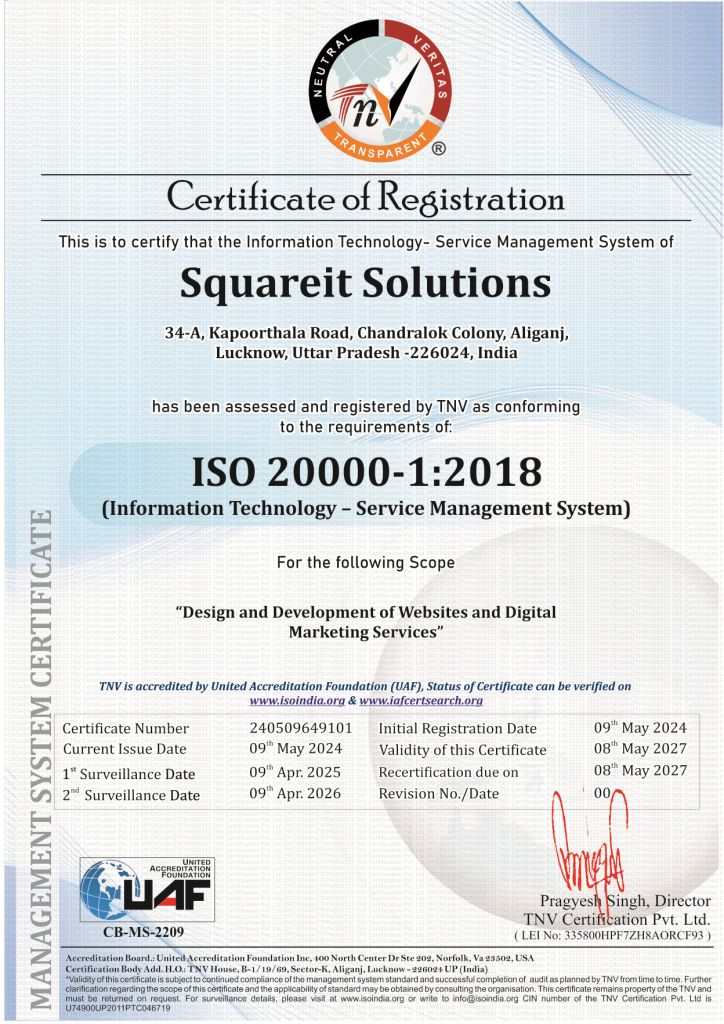
If you're looking to build high-converting retargeting ads, optimize remarketing campaigns, and create scalable digital marketing systems, Squareit Solutions is an exclusive and certified digital marketing agency in Lucknow. With expertise in performance marketing, Meta advertising, Google Ads, SEO, and lead generation strategies, Squareit Solutions helps businesses recover lost leads, increase conversions, and achieve measurable growth in 2026 and beyond.
FAQs
What are Retargeting Campaign Strategies?
Retargeting Campaign Strategies are marketing techniques used to re-engage users who previously interacted with your website, social media pages, or advertisements but did not convert.
How do retargeting ads work?
Retargeting ads use tracking technologies such as cookies, Google tags, and the Meta Pixel to identify previous visitors and show them relevant advertisements across digital platforms.
What is the difference between retargeting and remarketing campaigns?
Retargeting usually refers to paid advertising aimed at previous visitors, while remarketing campaigns often involve email marketing and customer re-engagement efforts.
What is abandoned cart retargeting?
Abandoned cart retargeting targets users who added products to their cart but left before completing the purchase, encouraging them to return and finish checkout.
What is website visitor retargeting?
Website visitor retargeting focuses on re-engaging people who visited your website but did not take a desired action such as purchasing, subscribing, or filling out a form.