


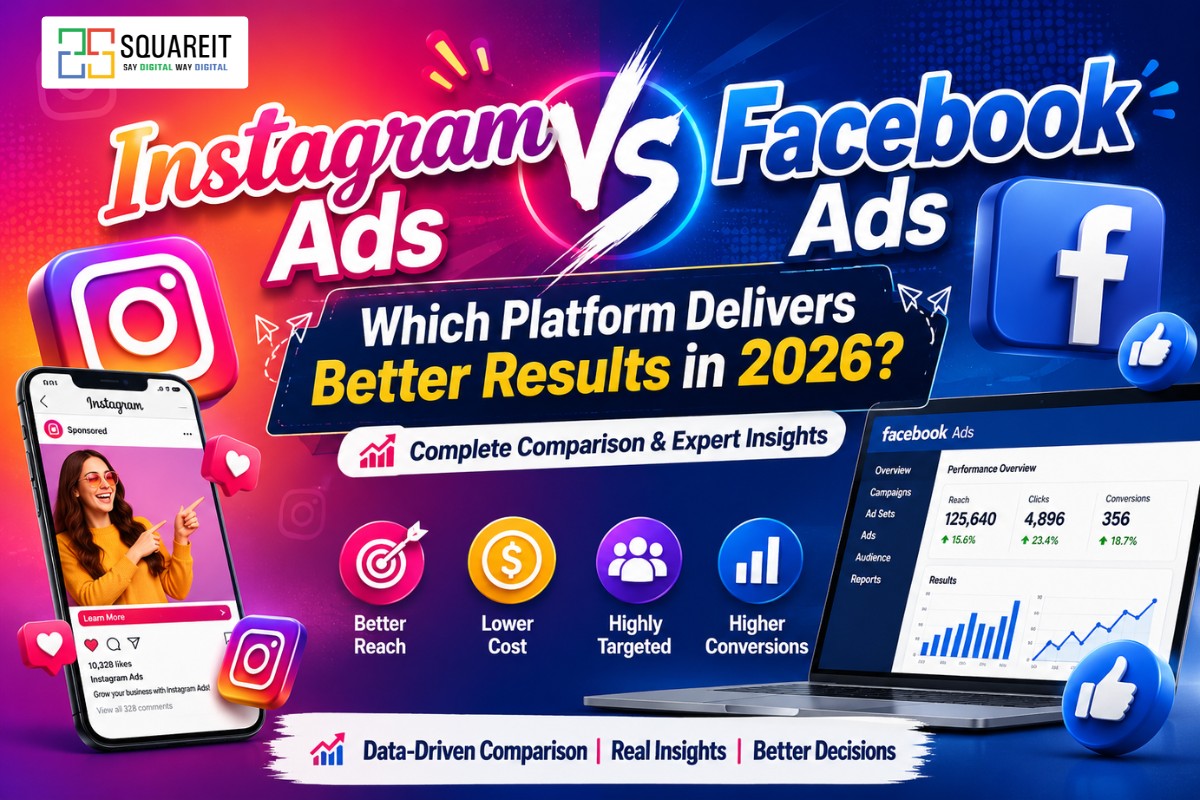
In today's highly competitive digital landscape, businesses can no longer rely solely on organic reach to grow online. Paid advertising has become one of the most effective ways to generate leads, increase sales, and build brand awareness. Since both Instagram and Facebook operate under the Meta ecosystem, businesses often struggle to decide which platform deserves a larger share of their advertising budget.
The debate around Instagram Ads vs Facebook Ads continues to be one of the most searched topics among marketers in 2026. While both platforms use Meta Ads Manager, they cater to different audiences, content formats, and marketing goals.
So, which platform actually delivers better results in 2026?
The answer depends on your target audience, business objectives, industry, and advertising strategy. In this detailed guide, we'll compare Facebook Ads vs Instagram Ads, discuss their strengths and weaknesses, and help you determine the best advertising platform for your business.
Understanding Meta Advertising in 2026
Meta owns both Facebook and Instagram, allowing advertisers to manage campaigns from a single dashboard called Meta Ads Manager.
This means businesses can:
- Run ads on Facebook
- Run ads on Instagram
- Display ads across Messenger
- Reach users through Audience Network
- Track campaign performance in one place
Although both platforms share the same advertising system, user behavior differs significantly.
This makes choosing the right platform extremely important.
Instagram Advertising in 2026
Instagram advertising has become increasingly powerful due to the popularity of short-form video, influencer marketing, and visual storytelling.
Instagram is ideal for brands that rely heavily on attractive visuals and engaging content.
Popular ad formats include:
- Stories Ads
- Reels Ads
- Feed Ads
- Carousel Ads
- Explore Ads
- Shopping Ads
Instagram works exceptionally well for:
- Fashion brands
- Beauty products
- Restaurants
- Fitness businesses
- Travel companies
- Personal brands
- Lifestyle products
- E-commerce stores
Facebook Advertising in 2026
Despite the rapid growth of Instagram, Facebook advertising continues to deliver exceptional ROI for many industries.
Facebook offers more advanced audience targeting, larger user demographics, and detailed campaign objectives.
Popular Facebook ad formats include:
- Image Ads
- Video Ads
- Carousel Ads
- Collection Ads
- Instant Experience Ads
- Lead Form Ads
Facebook remains highly effective for:
- Real estate
- Educational institutes
- Healthcare
- B2B companies
- Local businesses
- Financial services
- Coaching institutes
- Government services
Instagram Ads vs Facebook Ads: Major Differences
Let's compare the two platforms across several important marketing factors.
1. Audience Size
Facebook still has one of the largest social media user bases globally.
Instagram, however, has experienced tremendous growth among younger users.
Instagram Audience
- Mostly 18–34 years
- Highly engaged users
- Mobile-first audience
- Visual content lovers
Facebook Audience
- 25–60+ years
- Larger demographic diversity
- Strong community groups
- Better reach among older users
If your business targets Gen Z and Millennials, Instagram may perform better.
If your customers belong to multiple age groups, Facebook remains a stronger option.
2. Content Style
Instagram is a visual platform.
Photos, Reels, Stories, and videos dominate user engagement.
Facebook supports more diverse content formats including:
- Articles
- Videos
- Images
- Community posts
- Events
- Marketplace listings
Businesses focusing on educational or informative content often perform better on Facebook.
Lifestyle brands usually thrive on Instagram.
3. Lead Generation
One major consideration in Instagram Ads vs Facebook Ads is lead generation.
Instagram Lead Generation
Instagram lead generation works best through:
- Story ads
- Reels
- Click-to-message campaigns
- Landing page conversions
However, Instagram users generally browse for inspiration rather than making immediate purchasing decisions.
Facebook Lead Generation
Facebook lead generation is still considered one of the strongest advertising methods.
Businesses can collect leads directly using:
- Instant Lead Forms
- Messenger campaigns
- WhatsApp integration
- Conversion campaigns
Educational institutions, real estate businesses, coaching centers, and healthcare companies often achieve lower acquisition costs on Facebook.
Engagement Comparison
Instagram generally records higher engagement rates than Facebook.
This happens because:
- Reels receive strong organic exposure.
- Stories encourage quick interaction.
- Visual content attracts more likes and shares.
Facebook engagement has shifted toward:
- Groups
- Local communities
- Marketplace
- Video content
If your objective is brand engagement, Instagram usually performs better.
Conversion Performance
Conversions depend on your business type.
Instagram performs well for:
- Fashion
- Beauty
- Accessories
- Fitness
- Food
- Home decor
Facebook performs better for:
- Education
- B2B
- Insurance
- Real estate
- Healthcare
- Professional services
Businesses selling high-ticket products often see stronger conversion rates through Facebook.
Advertising Costs in 2026
Advertising costs vary depending on:
- Industry
- Competition
- Audience size
- Seasonality
- Campaign objective
Generally:
Instagram tends to have higher engagement but can also be more competitive for lifestyle brands.
Facebook often provides more cost-efficient lead generation for service-based businesses.
Instead of focusing only on budget, advertisers should optimize campaigns based on results and long-term profitability.
Targeting Options
Since both platforms use Meta Ads Manager, advertisers receive almost identical targeting options.
These include:
- Interests
- Behaviors
- Custom audiences
- Lookalike audiences
- Website visitors
- Customer lists
- Purchase history
- Location targeting
The real difference lies in how users interact with ads after they see them.

Best Industries for Instagram Advertising
Instagram performs exceptionally well for businesses such as:
- Fashion stores
- Beauty salons
- Cosmetic brands
- Jewellery
- Food delivery
- Travel agencies
- Interior designers
- Influencers
- Fitness trainers
- Luxury brands
Strong visuals often lead to higher engagement and better brand recall.
Best Industries for Facebook Advertising
Facebook continues to dominate industries like:
- Schools
- Colleges
- Coaching institutes
- Hospitals
- Lawyers
- Property consultants
- Automobile dealerships
- Financial advisors
- Local service providers
- B2B companies
Detailed targeting and lead forms make Facebook highly effective for service-based businesses.
When Should You Choose Instagram Ads?
Instagram is the better option if:
- Your audience is younger.
- Your products are visually appealing.
- You create Reels consistently.
- Brand awareness is your goal.
- You rely heavily on influencer collaborations.
- You sell directly through social commerce.
When Should You Choose Facebook Ads?
Facebook is ideal if:
- Your audience is over 30.
- You generate leads.
- You offer professional services.
- You sell high-value products.
- You target local customers.
- You need detailed audience segmentation.
Why Many Businesses Use Both Platforms
The smartest Meta Ads strategy in 2026 isn't choosing one platform over the other—it’s leveraging both together.
A combined approach allows you to:
- Increase overall reach
- Improve brand visibility
- Retarget website visitors
- Capture leads on Facebook
- Build engagement on Instagram
- Maximize conversions
Running integrated campaigns often produces stronger results than relying on a single platform.

Tips to Improve Meta Advertising Performance
To maximize your advertising results:
- Use high-quality images and videos.
- Test multiple creatives.
- Write compelling ad copy.
- Install the Meta Pixel.
- Monitor campaign performance regularly.
- A/B test different audiences.
- Optimize landing pages.
- Focus on campaign objectives instead of vanity metrics.
- Retarget engaged users.
- Scale successful campaigns gradually.
These best practices can significantly improve campaign efficiency and profitability.
Common Mistakes Businesses Make
Avoid these common advertising mistakes:
- Choosing the wrong campaign objective.
- Targeting overly broad audiences.
- Ignoring retargeting opportunities.
- Using low-quality creatives.
- Not testing different ad variations.
- Stopping campaigns too early.
- Focusing only on likes instead of conversions.
Successful advertisers continuously analyze data and optimize campaigns based on performance.
Conclusion
Choosing between Instagram Ads vs Facebook Ads isn't about declaring one platform better than the other—it's about selecting the right platform for your audience, objectives, and business model. Instagram is excellent for building brand awareness and engaging younger audiences through visually rich content, while Facebook remains a leader in lead generation, audience targeting, and driving conversions for service-based businesses. By combining both platforms under a well-planned Meta advertising strategy, businesses can achieve stronger reach, higher engagement, and improved ROI.
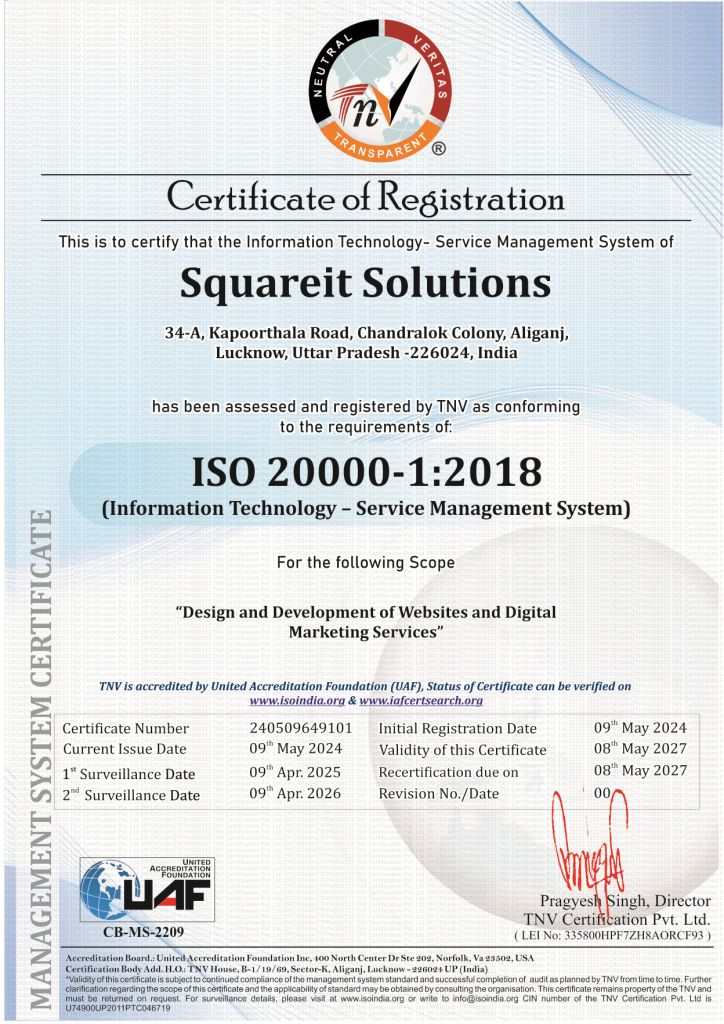
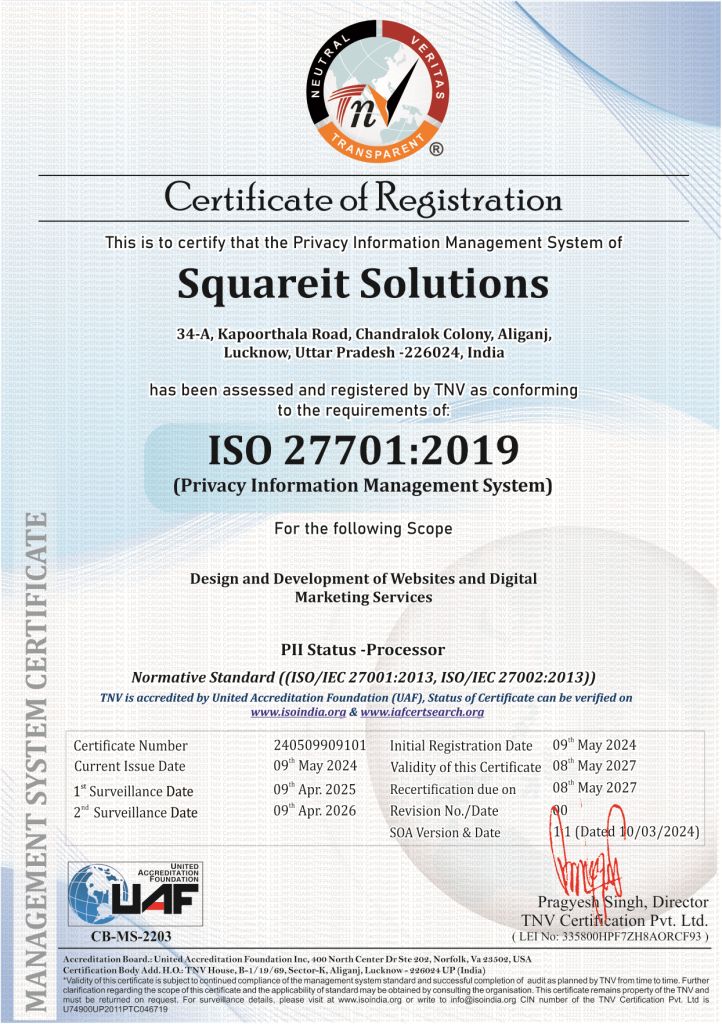
If you're looking to grow your business with result-driven social media advertising, Squareit Solutions is an exclusive and certified Digital Marketing agency in Lucknow. From campaign planning and audience targeting to creative development, lead generation, and performance optimization, our team helps businesses maximize their advertising investment and achieve measurable growth in 2026 and beyond.
FAQs
1. What is the difference in ad placement comparison between Instagram and Facebook?
Instagram focuses on placements like Feed, Stories, Reels, Explore, and Shopping, while Facebook includes Feed, Marketplace, Video Feed, Right Column, Groups, Messenger, and more. Choosing the right placement depends on your campaign objective and audience behavior.
2. How do audience demographics affect campaign performance?
Audience demographics such as age, gender, interests, location, and online behavior influence how users interact with ads. Instagram generally attracts younger users, while Facebook offers a broader age range, making demographic analysis essential for better targeting.
3. Which platform usually has a lower cost per click?
The cost per click varies by industry, competition, and campaign quality. In many service-based industries, Facebook may offer lower CPC, while Instagram can deliver strong engagement for visual brands. Regular testing helps identify the most cost-effective option.
4. Which platform offers a better cost per lead?
The cost per lead depends on your business type and campaign setup. Facebook often generates lower-cost leads for education, real estate, healthcare, and B2B services, while Instagram can perform well for lifestyle and e-commerce brands with compelling visuals.
5. How can businesses improve return on ad spend?
Improving return on ad spend involves optimizing audience targeting, using high-quality creatives, testing multiple ad variations, improving landing pages, and continuously monitoring campaign performance. A data-driven approach helps maximize every advertising dollar.