





Google Ads for property helps real estate businesses reach intent-based buyers who are actively searching for homes and properties. With targeted keywords, location-based campaigns, and optimized landing pages, businesses can generate relevant leads, improve lead quality, and increase site visits. A well-planned Google Ads strategy can make real estate lead generation more effective and measurable in India.
Real estate is one of the most competitive industries in India, and generating quality leads is a major challenge for builders, developers, brokers, and real estate agencies. With more property buyers researching homes online, digital advertising has become an important part of real estate marketing. However, choosing the right advertising platform can make a significant difference in campaign performance, lead quality, and overall marketing costs.
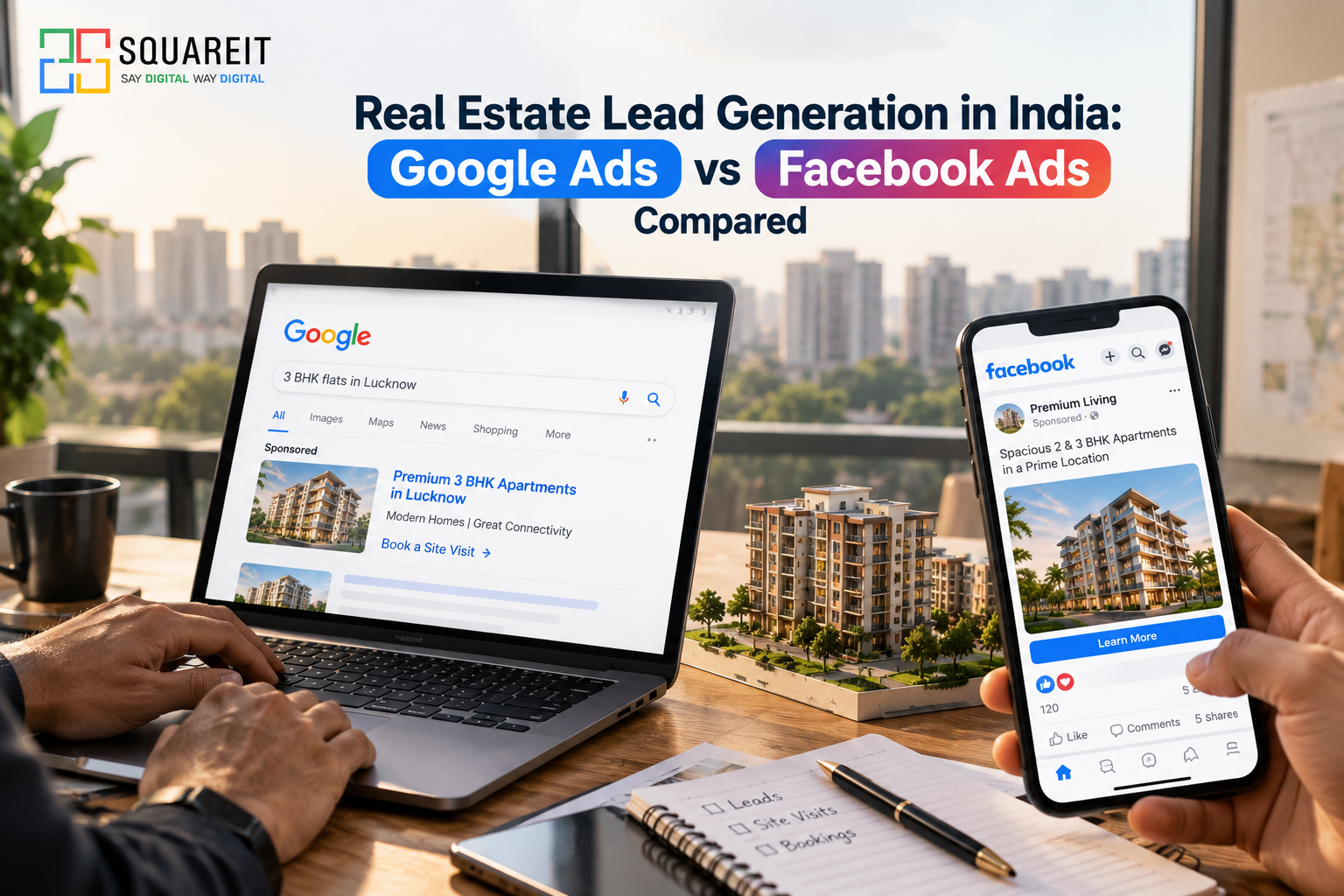
Two of the most popular options are Google Ads and Facebook Ads, including Instagram Ads. Both platforms help businesses reach potential property buyers, but they work differently. Google Ads targets people actively searching for properties, while Facebook and Instagram Ads help businesses reach audiences based on their interests, demographics, and online behaviour.
So, which platform is better for real estate lead generation in India? The answer depends on your project, target audience, budget, and sales objectives. In this guide, we compare both platforms and explain how to generate better property buyer leads, improve conversion rates, and build a more effective advertising strategy.
Google Ads vs Facebook Ads: A Comparison for Real Estate
Google Ads and Facebook Ads serve different purposes in the property-buying journey. Understanding their strengths can help you allocate your advertising budget more effectively.
Neither platform guarantees lower costs or better leads in every situation. Google Ads can attract highly relevant enquiries, but competitive property keywords can be expensive. Facebook Ads for real estate may generate a higher volume of enquiries, but some prospects might be researching casually rather than planning an immediate purchase.
The best choice depends on the quality of enquiries, cost per qualified lead, site visits, and actual sales—not simply the number of leads generated.
When to Use Google Ads for Property: Reaching Intent-Based Buyers

Google Ads is particularly useful when potential buyers are actively searching for properties, residential projects, commercial spaces, or investment opportunities. These searches reveal an existing requirement, making search advertising an effective option for capturing demand.
For example, someone searching for “Premium 3 BHK Apartment in Lucknow,” “Luxury Flats in Gomti Nagar,” may already be comparing available options. A relevant advertisement can introduce your project at the right moment.
Benefits of Google Ads for Real Estate
1. Reach buyers with clear intent
Search campaigns allow advertisers to target relevant search terms associated with their property offerings. By selecting keywords that match the project’s location, price range, and configuration, businesses can attract enquiries from people looking for suitable properties.
2. Target specific locations
Location targeting helps developers and agents focus their campaigns on relevant markets. For example, a residential project in Lucknow may target selected areas within the city or other locations from which potential buyers are likely to consider purchasing property.
Location settings should be reviewed carefully because they do not guarantee that every person reached lives in the selected area or intends to purchase there.
3. Control spending and measure performance
Google Ads provides tools to set budgets, track conversions, and evaluate campaign performance. Businesses can monitor enquiries, calls, form submissions, and other meaningful actions to understand which campaigns generate results.
4. Use negative keywords
Negative keywords help prevent advertisements from appearing for irrelevant searches. For example, a developer selling premium apartments may exclude searches related to free housing schemes, rental accommodation, or property jobs when those searches do not match the campaign objective.
Best Practices for Google Ads
-
Group keywords according to property type, location, configuration, and buyer intent.
-
Use specific, relevant ad copy that accurately describes the project.
-
Direct users to dedicated landing pages instead of sending every visitor to the homepage.
-
Track qualified enquiries, scheduled site visits, and sales wherever reliable tracking is available.
-
Review search terms regularly and remove irrelevant traffic.
Google Ads for property works best when campaigns are built around genuine buyer requirements and supported by relevant landing pages and consistent sales follow-up.
When to Use Facebook and Instagram Ads: Awareness and New Launches
Facebook and Instagram Ads are valuable when a real estate business wants to introduce a new project, increase local awareness, promote an upcoming launch, or reach people who may not be actively searching for property yet.
Unlike search advertising, these platforms do not rely primarily on users entering property-related keywords. Instead, advertisers can reach eligible audiences using location, demographics, interests, engagement signals, and available campaign targeting options.
This makes social advertising particularly useful for projects that need visibility before generating direct enquiries.
Benefits of Facebook Ads for Real Estate
1. Showcase the property visually
Real estate is a visual purchase. High-quality photographs, walkthrough videos, floor plans, amenities, and construction updates can help potential buyers understand what a project offers.
Carousel ads can showcase multiple property features, while short videos can communicate the location, lifestyle, and key benefits of a development.
2. Generate leads through instant forms
Meta lead ads can allow interested users to submit their details without navigating to an external website. This reduces friction and can help businesses collect enquiries efficiently.
However, a simple form may attract people who are not seriously considering a purchase. Including relevant qualifying questions can help improve the usefulness of these enquiries.
3. Promote new launches and offers
Facebook and Instagram campaigns can create awareness around new residential projects, property exhibitions, launch events, and limited-period offers. Advertisers should ensure that promotional claims are accurate, transparent, and supported by the actual offer.
4. Re-engage interested audiences
Where permitted by platform policies and applicable privacy requirements, remarketing can help businesses reconnect with eligible audiences who have previously interacted with their website or advertisements.
For example, someone who watched a property walkthrough may later see another advertisement highlighting the project's amenities or inviting them to schedule a site visit.
Best Practices for Social Media Property Campaigns
-
Use authentic project photographs, walkthroughs, and clearly presented amenities.
-
Communicate the location, property type, and relevant price information where available.
-
Keep lead forms concise while asking enough questions to assess buyer requirements.
-
Test different creatives, messages, and calls to action.
-
Follow Meta's housing and special-ad-category requirements where applicable.
Facebook ads for real estate can be especially effective for generating initial interest and building a pipeline of prospective buyers. Their performance improves when advertising is connected to a structured qualification and follow-up process.
How to Improve Lead Quality in Real Estate Lead Generation
Generating hundreds of enquiries does not necessarily translate into property sales. The real objective of real estate lead generation is to attract prospects who match the project's location, budget, property type, and purchase timeline.
A campaign that generates fewer but more relevant leads may deliver better business results than one that generates a large number of unqualified enquiries.
1. Define Your Ideal Buyer
Before launching advertisements, identify the type of buyer most likely to purchase the property. Consider factors such as budget, preferred location, property configuration, intended use, and expected purchase timeline.
For example, the audience for affordable residential apartments may differ significantly from the audience for luxury villas or commercial offices.
2. Ask Relevant Qualifying Questions
Collect information that helps your sales team understand the prospect's requirements. Depending on the project, useful questions may include:
-
What is your preferred property type?
-
What is your approximate budget?
-
Which location are you considering?
-
Are you planning to purchase within the next three months, six months, or later?
-
Would you like to schedule a site visit?
Avoid asking for unnecessary personal information. Keep forms relevant to the enquiry and explain how submitted information will be used.
3. Measure Qualified Leads, Not Just Enquiries
Cost per lead (CPL) is useful, but it does not tell the complete story. A low-cost lead may be unresponsive, outside the target budget, or unsuitable for the project.
Track the entire funnel, including:
-
Total enquiries received.
-
Percentage of enquiries successfully contacted.
-
Qualified leads.
-
Site visits scheduled and completed.
-
Booking conversions.
-
Cost per qualified lead and cost per booking.
These metrics help identify which campaigns contribute to actual business outcomes.
4. Connect Advertising With Your CRM
A customer relationship management (CRM) system can centralise enquiries from Google Ads, Facebook Ads, Instagram, website forms, and telephone calls.
It also helps teams assign leads, record conversations, track follow-up dates, and identify prospects who need additional information. With accurate source tracking, businesses can compare the performance of different advertising channels more reliably.
Landing Page Must-Haves for Property Campaigns
A landing page plays an important role in converting advertising traffic into property enquiries. Even a well-targeted campaign can underperform if the page is slow, confusing, or missing essential project information.
Instead of directing every advertisement to a general website homepage, create a landing page that closely matches the property and message featured in the ad.
Essential Landing Page Elements
1. A clear headline
State what the project offers and where it is located. A headline such as “Explore 3 BHK Apartments in Gomti Nagar, Lucknow” immediately communicates the page's purpose.
2. Accurate property details
Include relevant information about configurations, amenities, location, connectivity, available facilities, and pricing where confirmed. Clearly distinguish between confirmed details and indicative information.
3. High-quality visuals
Use genuine property photographs, floor plans, walkthrough videos, and relevant project images. Visuals should accurately represent the development and must not mislead prospective buyers about its current status or facilities.
4. A simple enquiry form
Request only the information necessary to respond to the prospect. Use a clear call to action, such as “Request a Callback” or “Schedule a Site Visit.”
5. Trust and compliance information
Display the developer's identity, contact details, applicable project registration information, and relevant disclosures. Where RERA registration is required, provide accurate details and avoid unsupported claims about approvals or project status.
6. Mobile-friendly design and fast loading
Many prospective buyers browse property advertisements on mobile devices. Ensure that the landing page loads quickly, the text is readable, and forms are easy to complete.
7. Privacy information
Provide an accessible privacy policy and explain how enquiry details may be used. Obtain appropriate consent where required and handle personal information in accordance with applicable Indian laws and platform policies.
A well-designed landing page improves the connection between the advertisement and the buyer's expectations, helping businesses make better use of their advertising budget.
Follow-Up Process That Converts Leads
The advertising campaign is only the beginning of the sales process. Timely, relevant follow-up helps determine whether an enquiry becomes a conversation, site visit, or booking.
In competitive property markets, a delayed response can mean that a prospect contacts another developer before your sales team gets in touch.
1. Respond Promptly
Contact new enquiries as soon as reasonably possible during appropriate business hours. A quick response helps maintain interest and gives the sales team an opportunity to understand the buyer's requirements.
2. Assign Leads Clearly
Every enquiry should have a designated owner. CRM-based assignment can help distribute leads among sales representatives and reduce the risk of enquiries being overlooked.
3. Personalise the Conversation
Avoid using the same generic message for every prospect. Refer to the property or configuration they enquired about and ask relevant questions about their budget, location preferences, and purchase timeline.
4. Use Multiple Follow-Up Channels Responsibly
Depending on the prospect's preferences and applicable consent requirements, follow-up may include telephone calls, email, or WhatsApp messages. Avoid excessive messaging, respect opt-outs, and follow applicable communication and privacy rules.
5. Maintain a Structured Follow-Up Schedule
Create a practical sequence for initial contact, sharing requested property information, answering questions, and arranging site visits. Record every meaningful interaction in the CRM so that team members have the context needed for future conversations.
6. Review Sales Feedback
Ask the sales team to record why leads were qualified, disqualified, or lost. This feedback can reveal whether the problem lies in audience targeting, pricing expectations, the landing page, or the follow-up process.
A consistent sales process ensures that advertising performance is evaluated against genuine business outcomes rather than lead volume alone.
RERA Compliance and Responsible Real Estate Advertising in India
Real estate advertising should be accurate, transparent, and consistent with applicable regulations. Under the Real Estate (Regulation and Development) Act, 2016, project registration and advertising requirements may apply depending on the project and the relevant legal circumstances.
Before publishing advertisements, verify whether the project requires RERA registration and ensure that applicable registration details are included in advertisements as required. Do not advertise unverified approvals, guaranteed returns, misleading possession dates, or facilities that are not supported by the project's actual status.
Businesses should also comply with applicable Google Ads and Meta advertising policies, including relevant housing-related restrictions, as well as privacy and consent requirements for collecting and using prospect information.
For complex projects or regulatory questions, seek guidance from a qualified legal professional. Compliance is not simply a formality; it supports transparency and helps build trust with prospective buyers.
Conclusion: Which Platform Is Better for Real Estate Lead Generation?
Google Ads and Facebook Ads serve different purposes, and both can contribute to successful real estate lead generation in India.
Google Ads is often a strong starting point when buyers are actively searching for properties in a specific location or price range. Facebook and Instagram Ads are useful for building awareness, promoting new launches, showcasing property features, and reaching potential buyers who may not yet be searching actively.
For many real estate businesses, a combined strategy can deliver better results. Use Google Ads to capture existing demand and social media advertising to introduce projects to new audiences. Support both channels with relevant landing pages, accurate tracking, CRM integration, and timely sales follow-up.
Most importantly, evaluate performance using qualified leads, site visits, and bookings rather than cost per lead alone. The most effective approach to real estate marketing in India is the one that consistently connects the right property with the right buyer while maintaining transparent advertising and responsible data practices.
If you want to understand how to get property buyer leads more effectively, start by identifying your ideal audience, choosing the appropriate platform, and building a complete process from the first advertisement to the final sale.
Frequently Asked Questions
1. Which is better for real estate lead generation in India: Google Ads or Facebook Ads?
Google Ads is often more suitable for reaching people actively searching for properties, while Facebook and Instagram Ads are useful for awareness, new launches, and generating interest among potential buyers. The best choice depends on your project, audience, budget, and sales objectives.
2. Are Google Ads more expensive than Facebook Ads for real estate?
Not necessarily. Costs depend on competition, targeting, location, creative quality, landing page performance, and conversion rates. Compare cost per qualified lead and cost per booking rather than relying only on the cost per enquiry.
3. How can I get quality property buyer leads online?
Define your ideal buyer, target relevant audiences, provide accurate project information, use dedicated landing pages, and include appropriate qualifying questions in lead forms. Connect enquiries to a CRM and follow up consistently to improve lead qualification and conversion.
4. What is a good cost per lead for real estate in India?
There is no universal benchmark. Costs vary by city, property segment, project price, buyer intent, and competition. Establish a baseline using actual campaign data and evaluate whether the leads are progressing to site visits and bookings.
5. Should real estate businesses use landing pages or instant lead forms?
Both can work. Instant forms can reduce the steps required to submit an enquiry, while landing pages provide more space to explain the project and qualify buyers. Test both approaches and compare the quality and conversion rate of the resulting leads.
6. Is RERA registration important for real estate advertisements?
Where project registration and advertising requirements apply, businesses must comply with the relevant provisions of RERA and applicable state rules. Verify registration requirements and ensure that advertisements contain the necessary information and accurate project claims.
7. How quickly should real estate sales teams follow up with new leads?
Sales teams should aim to respond as promptly as reasonably possible during appropriate business hours. A structured process, clear lead ownership, and CRM reminders help reduce missed enquiries and keep communication consistent.
8. Can Google Ads and Facebook Ads be used together?
Yes. Google Ads can capture active property demand, while Facebook and Instagram Ads can build awareness and generate interest. Using both platforms with consistent tracking and CRM follow-up helps businesses understand which channels contribute to qualified leads, site visits, and bookings.