





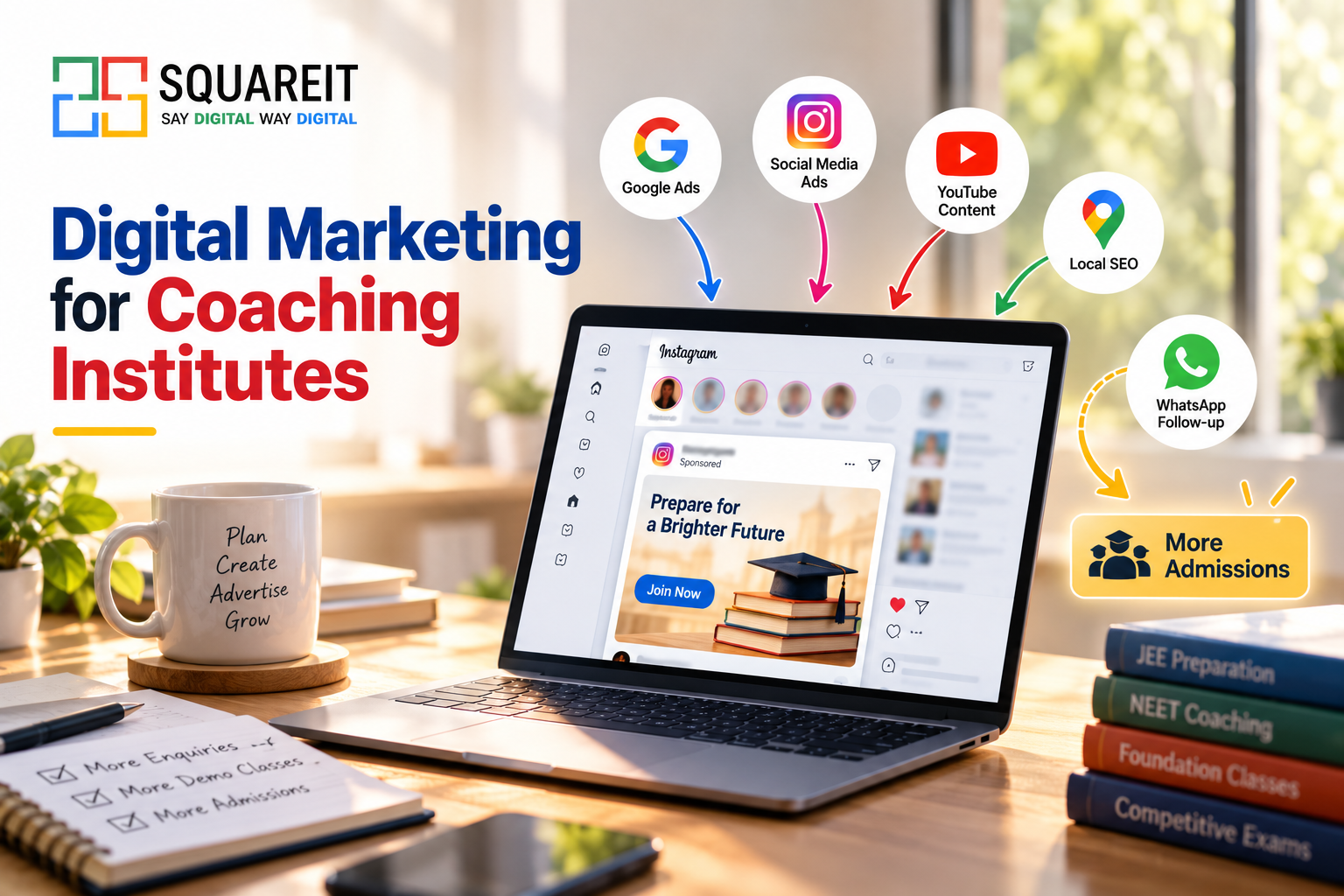
India has thousands of coaching institutes offering preparation for competitive exams, school subjects, entrance examinations, and professional courses. With increasing competition, attracting students and convincing parents to choose the right institute has become more challenging than ever. Traditional marketing methods are still useful, but digital platforms have changed how coaching institutes reach potential students.
Digital marketing for coaching institutes helps educational businesses connect with students and parents through search engines, social media, online advertisements, websites, and other digital channels. Instead of depending only on banners, posters, and newspaper advertisements, coaching centres can now target relevant audiences, generate student enquiries, and track their marketing performance.
A well-planned digital marketing strategy can improve local visibility, build trust, and help institutes generate quality admission enquiries throughout the year.
Traditional Marketing vs. Digital Marketing

Before understanding digital marketing strategies, it is important to know the difference between traditional and digital marketing.
-
Traditional Marketing: It refers to promoting a business through offline channels such as hoardings, banners, posters, pamphlets, newspaper advertisements, and local events. These methods can help coaching institutes build awareness within a particular area, but measuring their direct impact on admissions can be difficult.
-
Digital Marketing: It refers to promoting services through online channels such as Google Ads, Meta Ads, social media, websites, search engine optimisation (SEO), and video marketing. These channels allow coaching institutes to reach specific audiences, measure engagement, and improve campaigns based on performance.
Both methods can work together. For example, a coaching centre can distribute pamphlets locally while running Google Ads to reach students searching for coaching classes in the same area. This combination helps create awareness and capture demand from students who are actively looking for courses.
Digital Marketing for Coaching Institutes
Digital marketing is a strategy that helps coaching institutes attract students and parents through online visibility, relevant content, paid advertising, and consistent communication.
A successful strategy should focus not only on generating enquiries but also on converting interested students into admissions.
The following digital marketing services can help coaching institutes improve their reach and admission enquiries.
1. Local Search Engine Optimisation (SEO)
Local SEO helps coaching institutes appear in relevant search results when students and parents look for nearby coaching centres. For example, a student might search for “NEET coaching institute near me” or “best maths coaching in Lucknow.”
To improve local search visibility, institutes should optimise their website with relevant course information, location details, faculty profiles, and frequently asked questions.
Important local SEO activities include:
-
Targeting relevant location-based keywords naturally.
-
Creating separate website pages for major courses and services.
-
Improving website speed and mobile usability.
-
Building relevant local citations and maintaining consistent business information.
-
Publishing helpful educational content that answers students’ questions.
Local SEO is a long-term strategy. It can help coaching centres attract students who are already interested in their courses without depending entirely on paid advertising.
2. Google Business Profile Optimisation

A Google Business Profile helps coaching institutes appear on Google Search and Maps for relevant local searches. An accurate and complete profile can make it easier for students and parents to find the institute, check its location, and contact the team.
Institutes should keep their business name, address, phone number, opening hours, website, and course-related information accurate. They can also share genuine classroom photos, faculty introductions, important announcements, and admission updates.
Encouraging genuine reviews from students and parents can help build credibility. However, institutes should never purchase fake reviews or offer incentives in exchange for positive ratings.
3. Meta Ads and Google Ads

Paid advertising can help coaching institutes reach potential students during important admission periods.
Google Ads can be useful when students actively search for specific courses, such as JEE coaching, NEET preparation, or banking exam classes. Search campaigns can connect institutes with people who are already looking for relevant educational services.
Meta Ads, including Facebook and Instagram advertising, can help institutes introduce their courses to relevant audiences, promote demo classes, and generate enquiries through lead forms or messaging options.
For better results, institutes should:
-
Create separate campaigns for different courses.
-
Use clear and relevant advertisements.
-
Direct users to a dedicated course landing page or enquiry form.
-
Track calls, form submissions, and qualified leads.
-
Review campaign performance and adjust targeting and budgets.
The best platform depends on the course, target audience, competition, and campaign objective. Institutes should test different approaches and compare the cost and quality of enquiries rather than choosing a platform based only on the number of leads.
4. Website and Landing Page Optimisation
A coaching institute's website is often the first place where students and parents learn about its courses. A professional, mobile-friendly website can answer their questions and encourage them to enquire.
The website should clearly explain course details, class schedules, teaching methods, faculty experience, fees where appropriate, and admission procedures. It should also include visible contact information and a simple enquiry form.
Creating dedicated landing pages for individual courses can improve campaign relevance. For example, a page specifically designed for a NEET preparation course can include its syllabus, teaching approach, demo-class information, and a clear enquiry option.
Avoid making exaggerated promises such as guaranteed exam success or unsupported rank claims. Accurate information helps establish trust and supports a better student experience.
5. Video and Content Marketing
Educational content can help coaching institutes demonstrate their teaching quality before students enrol. Useful content includes concept explanations, exam preparation tips, syllabus updates, study schedules, and frequently asked questions.
YouTube is suitable for detailed lessons, revision sessions, and subject demonstrations. Instagram Reels and Facebook videos can help institutes share shorter educational tips, faculty introductions, and classroom highlights.
Content marketing can also include blogs answering questions such as how to prepare for competitive exams, how to choose a coaching institute, and how to manage exam stress.
Publishing useful content consistently can improve brand awareness, support SEO, and help students understand what makes an institute relevant to their learning needs.
6. Automation and Email Marketing
Following up with every enquiry manually can become difficult during admission season. Automation can help coaching institutes organise enquiries and communicate with interested students more efficiently.
For example, after a student submits an enquiry form, the institute can send an acknowledgement, share course information, and offer a suitable time for a counselling session or demo class.
Email marketing can be used to share admission schedules, course updates, preparation resources, and reminders with people who have consented to receive such communications.
Automation should support personal communication, not replace it entirely. Enquiries should be assigned to responsible team members, and students should have a clear way to ask questions or opt out of promotional messages.
How Students and Parents Choose Coaching Today
Students and parents generally compare several factors before selecting a coaching institute. These may include faculty experience, teaching quality, course structure, fees, location, learning support, and feedback from other students.
An institute's online presence can influence this decision. A complete website, helpful educational videos, genuine reviews, transparent course information, and clear communication can help prospective students evaluate their options.
Coaching centres should therefore focus on building trust instead of relying only on promotional advertisements. Sharing real classroom experiences, explaining teaching methods, and presenting verifiable student results can help parents make informed decisions.
YouTube and Instagram Content That Builds Trust
Social media provides opportunities to showcase the institute's teaching approach and connect with students regularly.
Some effective coaching institute marketing ideas include:
-
Demo Classes: Share short sample lessons to demonstrate teaching quality.
-
Results Posts: Publish verified student achievements with appropriate permission and accurate context.
-
Faculty Introductions: Introduce teachers and explain their subjects and experience.
-
Study Tips: Share revision techniques, preparation strategies, and exam updates.
-
Classroom Videos: Show genuine learning activities and institute facilities.
Content should be informative and authentic. Institutes must obtain appropriate consent before publishing student photographs, testimonials, or personal details. Results and success claims should be verifiable and should not imply that every student will achieve the same outcome.
Running Admission-Season Ad Campaigns
Admission campaigns work best when they are planned around the course calendar and the audience's decision-making process.
For example, an institute offering school tuition may increase promotion before a new academic session, while a competitive-exam coaching centre may align its campaigns with relevant examination and registration schedules.
A practical campaign plan includes:
-
Pre-Admission Phase: Build awareness through educational content, local SEO, and course announcements.
-
Enquiry Phase: Run Google Ads and Meta Ads to attract relevant enquiries and promote demo classes.
-
Counselling Phase: Share course details, answer questions, and schedule counselling sessions.
-
Follow-Up Phase: Contact interested students who have not yet completed their admission process.
-
Performance Review: Measure qualified leads, demo attendance, admissions, and cost per admission.
Starting campaigns several weeks before the planned admission period can provide time to build awareness and test advertisements. The ideal lead time depends on the course, examination schedule, and local competition.
WhatsApp and Follow-Up Systems
Generating student leads is only one part of the admission process. Timely follow-up is equally important because students may enquire at several institutes before making a decision.
WhatsApp can help coaching centres share course brochures, demo-class schedules, fee details, location information, and answers to common questions. A structured follow-up process can ensure that enquiries do not get overlooked.
Institutes can organise leads by course, enquiry date, interest level, and admission status. This helps the admission team prioritise students who have requested more information or expressed interest in attending a demo class.
Messages should be relevant, respectful, and sent in accordance with applicable consent and messaging rules. Avoid excessive promotional messages, misleading urgency, and repeated follow-ups after a student has asked not to be contacted.
Case Study: SS Coaching
SS Coaching can use an integrated digital marketing strategy to improve its online visibility and create a more organised admission process. The following is a proposed example of how such a strategy could work; actual campaign results should be added only when verified data is available.
The first step would be to optimise its Google Business Profile and website so that students can find accurate information about its courses, location, faculty, and admission process.
Next, the institute could run Google Search campaigns for relevant course-related searches and Meta Ads promoting demo classes or admission enquiries. YouTube videos and Instagram content could demonstrate teaching methods, share preparation tips, and introduce faculty members.
Finally, a structured WhatsApp follow-up system could help the admission team respond to enquiries, schedule demo classes, and track interested students.
Performance should be measured using qualified enquiries, demo-class attendance, admissions, cost per lead, and cost per admission. This data would help SS Coaching identify which channels contribute most effectively to its admission goals.
Conclusion
Digital marketing for coaching institutes is not limited to running advertisements. It involves building local visibility, creating useful educational content, communicating clearly with students and parents, and following up on enquiries systematically.
A combination of local SEO, Google Business Profile optimisation, Google Ads, Meta Ads, video marketing, a well-designed website, and WhatsApp follow-ups can help coaching centres improve their student lead generation efforts.
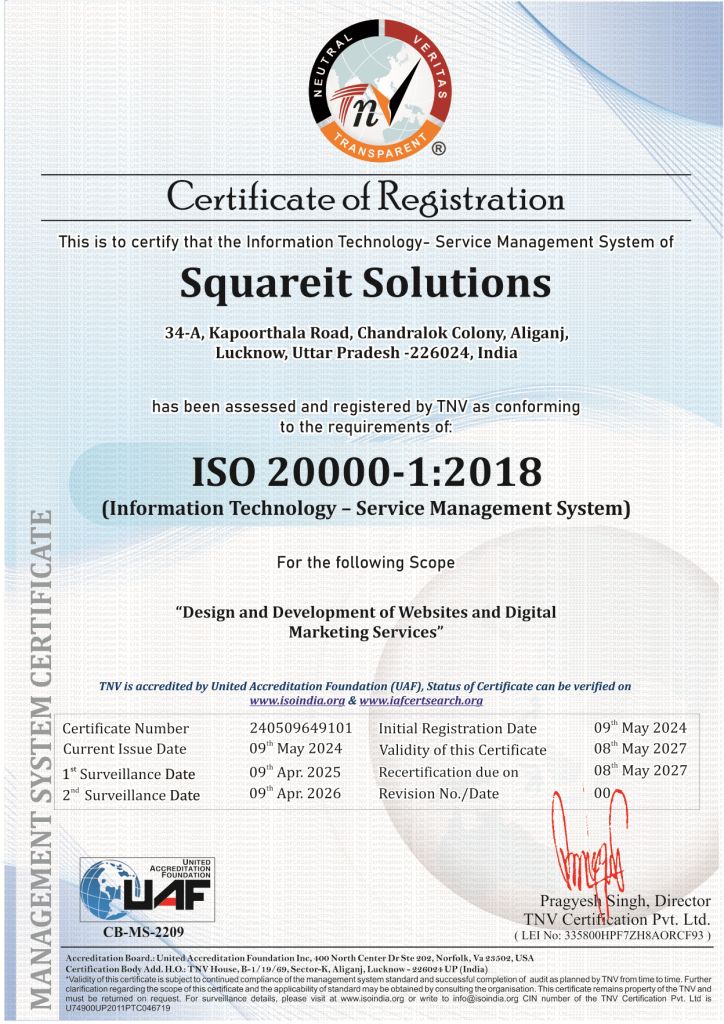
For coaching institutes looking to strengthen their online presence, Squareit Solutions, a digital marketing agency in Lucknow, can help develop digital marketing strategies tailored to their business goals. From local SEO and Google Business Profile optimisation to paid advertising, social media marketing, and lead generation, the right approach can help institutes reach relevant audiences and manage admission enquiries more effectively.
The key is to select strategies according to the institute's courses, target audience, budget, and admission calendar. By tracking enquiries through to actual admissions and improving campaigns based on reliable data, coaching institutes can build a stronger online presence and create a more sustainable admission process.
Frequently Asked Questions
1. How can coaching centres get more students?
Coaching centres can attract more students through local SEO, Google Business Profile optimisation, targeted Google and Meta Ads, educational videos, demo classes, genuine student testimonials, and timely follow-ups. Providing clear course information and a simple admission process can also help convert enquiries into admissions.
2. Which platform works best for education ads?
Google Ads is useful for reaching students who are actively searching for specific coaching courses. Facebook and Instagram Ads can help build awareness, promote demo classes, and generate enquiries. The best platform depends on the target audience, course type, location, and campaign performance.
3. When should admission campaigns start?
Admission campaigns should ideally begin several weeks before the expected admission period. Institutes can start with awareness-building content, followed by targeted advertisements and enquiry campaigns. The timing should reflect the academic calendar, examination dates, and the course's enrolment cycle.
4. How much should a coaching institute spend on digital marketing?
The budget depends on the institute's location, competition, course fees, admission targets, and available resources. Institutes should start with a manageable test budget, measure the quality of enquiries, and increase spending on campaigns that generate admissions at an acceptable cost.
5. Is digital marketing useful for small coaching centres?
Yes. Local SEO, Google Business Profile optimisation, educational social media content, and targeted advertising can help small coaching centres reach students in their service areas. A focused strategy can be more effective than trying to promote every course on every platform.
6. How can coaching institutes improve student lead generation?
Institutes can improve student lead generation by using relevant keywords, dedicated course landing pages, clear enquiry forms, demo-class offers, and targeted advertisements. Responding promptly and tracking each enquiry through the admission process can help improve conversion rates.
7. Why is WhatsApp important for coaching institute marketing?
WhatsApp provides a convenient channel for answering questions, sharing course details, scheduling demo classes, and following up with interested students. When used responsibly with appropriate consent, it can support communication and help the admission team manage enquiries more efficiently.